Sunday Worship

Holy Communion Service – Sunday 9th March

Today’s Collect Prayer

O God,
you know us to be set
in the midst of so many and great dangers,
that by reason of the frailty of our nature
we cannot always stand upright:
grant to us such strength and protection
as may support us in all dangers
and carry us through all temptations;
through Jesus Christ your Son our Lord,
who is alive and reigns with you,
in the unity of the Holy Spirit,
one God, now and for ever.

Today is the first Sunday since Ash Wednesday and first in Lent – (See our previous Sunday worship post). It’s been two weeks since we were last together and the little snowdrops have been superseded by a host of golden daffodils – to quote from Wordsworth.

Daffodils growing by the church wall at St Peter's Church Langton. The image shows the ivy clad red brick wall in full sunshine with lots of tall yellow daffodils in front
Daffodils at St Peter’s

Prayers for Ukraine – Lighting of the Candle

The service opened with our customary prayers and candle lighting for the people of Ukraine. We began this ritual when the war first began and have prayed consistently for the country and its people at the start of every service since. However, since last October, we now include prayers for peace in Gaza – and today we also remembered the anniversary of the start of the Covid pandemic in 2020.

Covid Pandemic Remembrance and Day of Reflection

Today, 9th March, is the day of Remembrance and Reflection on the fifth anniversary of the start of the Covid-19 Pandemic in 2020.

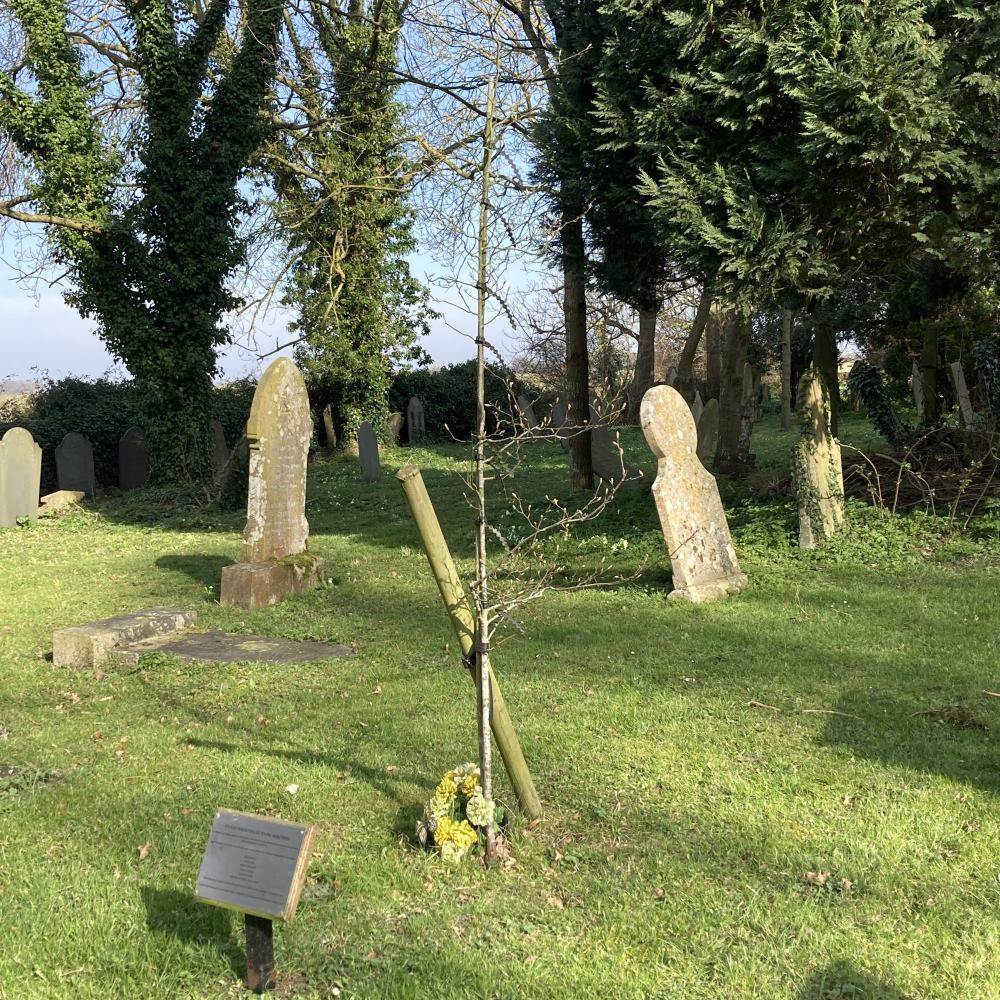
During that first year, our small village lost seven people and several members of our community were seriously ill with the virus. In their memory, the church council planted a Memorial Tree and plaque with the names of the villagers who died and to remember the people who suffered worldwide. The council chose the amalanchier tree because it comes to life in spring, when our first village members passed, but goes on to show beautiful leaf colour in the summer and autumn, which marks the subsequent losses of our friends which happened right through until November 2020. It was one of the saddest times in recent memory for our small community. The little tree also produces fruit that is much loved by blackbirds and other species that live in the churchyard. Here is a photograph of the Memorial Tree, which is growing strongly and just in blossom. The plaque is in the foreground. We haven’t shown the names on the plaque in respect of the families who continue to live here and mourn the loss of their loved ones still.

Photo of the churchyard at St Peter's where the Memorial Tree and plaque dedicated to the villagers and wider community lost during the Covid-19 Pandemic. The photo shows the green mown grass in the yard with grave stones and large yew trees behind the little amalanchier tree front centre, with the plaque at the front
Memorial Tree and Plaque in the churchyard.

Themes and thoughts

Today’s service was the first one in St Peter’s since Ash Wednesday, so the service we followed today was a slightly adapted Ashes Service – without the ashing itself but much of the prayers and readings.

The Gospel was Luke 4:1-13 which tells of Jesus’s time in the desert – Forty days and nights where he fasted, prayed and prepared for his ministry.

Forty Days and Forty Nights

The first hymn was of course, ‘Forty Days and Forty Nights’ written by George Hunt Smyttan and published in 1856. George Hunt Smyttan studied at Corpus Christi College, Cambridge, and graduated B.A. 1845. He was ordained Deacon in 1848, Priest in 1849, and appointed Rector of Hawksworth in 1850.

1. Forty days and forty nights
You were fasting in the wild;
Forty days and forty nights
Tempted, and yet undefiled.

2. Sunbeams scorching all the day;
Chilly dew-drops nightly shed;
Prowling beasts about your way;
Stones your pillow; earth your bed.

3. Shall not we your sorrow share,
And from earthly joys abstain,
Fasting with unceasing prayer,
Glad with you to suffer pain?

4. And if Satan, vexing sore,
Flesh or spirit should assail,
Christ, his vanquisher before,
Grant we may not faint or fail.

5. So shall we have peace divine;
Holier gladness ours be due;
Round us, too, shall angels shine,
Such as ministered to you.

6. Keep, oh, keep us, Saviour dear,
Ever constant at your side;
That we may with you appear
In your resurrection-tide.

Prayers

Prayers were said on confession, repentance, observing and keeping Lent.

Coffee and warm up afterwards

We followed the service with a good cup of hot coffee or tea. Thanks to our service team for a warm and thought provoking service. Upon leaving, we enjoyed the tiny daffodils in planters by the church door. Photos by Maxine Dodd.

Lent 2025

Ash Wednesday – 5th March and this year’s Lent course which begins on 11th March were announced and details will be published here shortly.

Donations

Donations can be made to St Peter’s at any time from the secure payment site here. Donations go towards maintenance of the building, day to day service bills and supports our work in our small community. Donations can be made as one-offs or regular payments.

We thank you for your kind and continued support.

The Season of Lent

The season of Lent is almost upon us – in fact this year, it starts early in March – This is an article with a little background and history to the season – and the Festivals that mark it.

What is Lent?
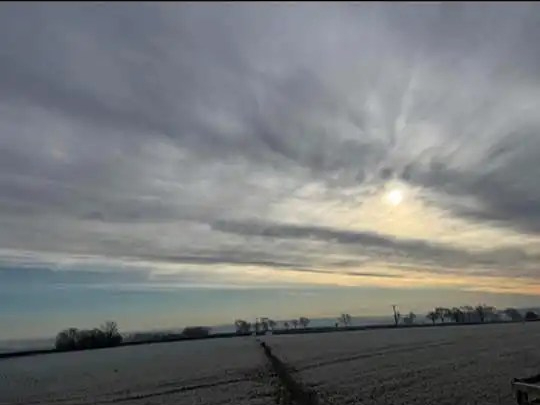
Clouds over the fields, photograph, Paul Lucas
Paul Lucas

The season of Lent is the time of reflection, fasting and prayer that Christians follow in the run-up to Easter, the most important part of the Christian faith. Christmas celebrates Jesus’s birth, but Easter celebrates his resurrection and promise of new life to everyone.

The Lent season lasts six weeks and reflects the 40 days that Jesus spent in the desert. Jesus spent this time alone there fasting, praying, thinking about his life ahead and his ministry to come. So, Lent begins with two contrasting days – Shrove Tuesday and Ash Wednesday.

Shrove Tuesday

Also known by many different names around the world – In the UK, we call it ‘Pancake Day’, France and French speaking countries, ‘Mardi Gras’ (Fat Tuesday), Spanish, Portuguese and Italian it is called, ‘Carnival’ – Germany ‘Fastnachtsdienstag’.

Whatever the origin of the name, the celebrations include food treats to use up all the eggs, fat and flour in the house before the time of fasting. Famous Mardi Gras festivals take place in New Orleans in the USA and in Venice, Italy, the remarkable ‘Carnival’ is world famous. Although contrasting, masks and elaborate costumes are worn in both celebrations and music abounds from every door and alleyway.

Ash Wednesday

This is the first day of Lent and after everyone has sobered up from the day before, the seriousness of Lent begins. In the UK, palm crosses from the previous year are solemnly burnt before the Ash Wednesday service. The priest mixes the ashes with sacred oil and during the service, anoints each person with a cross on their forehead. This is a symbol of their faith and their journey ahead – during Lent and beyond.

Why do Easter and Lent change dates?

A question we often wonder! The date of Easter is determined by the ‘inconstant moon’, as Shakespeare’s Juliet called it – Easter falls on the first full moon after the Spring equinox (on 21st March) and Lent is the six weeks before that. However, the moon’s pattern varies, so therefore the date of Easter and Lent vary as well.

Why the Full Moon? The Full Moon is a time to celebrate – this tradition goes back to the Ancient World, when harvesting, planting, reaping and sowing of people’s precious food was governed by the passage of the moon. Many gardeners still work to this pattern today – often with great success.

This link to pre Christian traditions is an interesting one – many links to ancient traditions and habits of life underpin the new Christian ones. Indeed many Christian churches, including our own church of St Peter here in Church Langton were built on ground that held ancient spiritual significance.

What do we do in Lent?

The season of Lent traditionally is a time of restraint in eating, drinking alcohol, coupled with prayer, reading the Bible and perhaps following a Lent course with others. These days, in the UK, how a person follows Lent is almost determined by them – Fasting can be strict or cutting out something you really enjoy.

Lent has recently become the time for doing something different in your life – Trying something positive, like more exercise – It is a great time for boosting your personal health and well-being – Body, mind and spirit.

Sundays are always festival days during Lent, so a good meal can be taken before starting the restrictions again in the week ahead.

Mothering Sunday

Mothering Sunday is a festival in the UK Lent season. It comes halfway through the six week Lent period on the third Sunday. Families get together to celebrate, give thanks for their mothers or those who take that role for them. Primroses and violets are traditionally given on this day.

Holy Week

Holy Week is the last week of Lent and follows Jesus’s last week of life on earth – as we know it. The events of that momentous week begin with Palm Sunday, his meetings with his family, Martha and Mary and progresses to Maunday Thursday, the Last Supper, his arrest and torture overnight, to the sorrow and heartbreak of his death on Good Friday. The climax and the joy comes on Easter Sunday with Jesus’s resurrection and promise of new life.

St Peter’s Church, Reredos: Last Supper, J Reid, after Leonardo Da Vinci

Easter

Easter is the new season – New life, new energy, new hope – More of that to come!

For now, enjoy pancake day, join us for Ash Wednesday at Welham and maybe even the Lent course – We’d love to see you.

The Countdown to Easter

The Church of England has a really useful guide online called ‘The Countdown to Easter’ which you might enjoy reading
Main photo courtesy Paul Lucas