Sunday Worship

Holy Communion Service – Sunday 22nd June, 10:30am

Today’s service is the First Sunday after Trinity

Today’s Collect Prayer

O God, the strength of all those who put their trust in you,
mercifully accept our prayers and, because through the weakness of our mortal nature we can do no good thing without you, grant us the help of your grace, that in the keeping of your commandments we may please you both in will and deed; through Jesus Christ your Son our Lord, who is alive and reigns with you, in the unity of the Holy Spirit, one God, now and for ever.

Themes and thoughts

The nicene creed

The Nicene Creed is a summary of core Christian beliefs, stated during worship. Its history dates back to Emperor Constantine, the first Roman emperor to convert to Christianity. Today, we reflected on the Creed – what it means to us and how important it is to affirm our faith publicly.

The words express beliefs held by Christians together; the first words being ‘We believe’ – This contrasts to the Apostle’s Creed, used for individuals (often during baptism) which begins with the words ‘I believe’.

These are the words of the Nicene Creed.

We believe in one God, 
the Father, the Almighty, 
maker of heaven and earth, 
of all that is, 
seen and unseen. 
We believe in one Lord, Jesus Christ, 
the only Son of God, 
eternally begotten of the Father, 
God from God, Light from Light, 
true God from true God, 
begotten, not made, 
of one Being with the Father; 
through him all things were made. 
For us and for our salvation he came down from heaven, 
was incarnate from the Holy Spirit and the Virgin Mary 
and was made man. 
For our sake he was crucified under Pontius Pilate; 
he suffered death and was buried. 
On the third day he rose again 
in accordance with the Scriptures; 
he ascended into heaven 
and is seated at the right hand of the Father. 
He will come again in glory to judge the living and the dead, 
and his kingdom will have no end. 
We believe in the Holy Spirit, 
the Lord, the giver of life, 
who proceeds from the Father and the Son, 
who with the Father and the Son is worshipped and glorified, 
who has spoken through the prophets. 
We believe in one holy catholic and apostolic Church. 
We acknowledge one baptism for the forgiveness of sins. 
We look for the resurrection of the dead, 
and the life of the world to come. 
Amen. 

The readings reflected the theme of belief – The first from the Acts of the Apostles, tells of St Paul’s time in Athens, where he came upon many altars to different gods and also one to the ‘Unknown God’ – Paul spoke to the people about this Unknown God and explained who He is.

Reading from Acts 17: Paul in Athens

16 Now while Paul was waiting for them at Athens, his spirit was provoked within him as he saw that the city was full of idols. 17 So he argued in the synagogue with the Jews and the devout persons, and in the market place every day with those who chanced to be there. 18 Some also of the Epicurean and Stoic philosophers met him. And some said, “What would this babbler say?” Others said, “He seems to be a preacher of foreign divinities”—because he preached Jesus and the resurrection. 19 And they took hold of him and brought him to the Are-op′agus, saying, “May we know what this new teaching is which you present? 20 For you bring some strange things to our ears; we wish to know therefore what these things mean.” 21 Now all the Athenians and the foreigners who lived there spent their time in nothing except telling or hearing something new.

22 So Paul, standing in the middle of the Are-op′agus, said: “Men of Athens, I perceive that in every way you are very religious. 23 For as I passed along, and observed the objects of your worship, I found also an altar with this inscription, ‘To an unknown god.’ What therefore you worship as unknown, this I proclaim to you. 24 The God who made the world and everything in it, being Lord of heaven and earth, does not live in shrines made by man, 25 nor is he served by human hands, as though he needed anything, since he himself gives to all men life and breath and everything. 26 And he made from one every nation of men to live on all the face of the earth, having determined allotted periods and the boundaries of their habitation, 27 that they should seek God, in the hope that they might feel after him and find him. Yet he is not far from each one of us, 28 for

‘In him we live and move and have our being’; as even some of your poets have said,

‘For we are indeed his offspring.’

29 Being then God’s offspring, we ought not to think that the Deity is like gold, or silver, or stone, a representation by the art and imagination of man. 30 The times of ignorance God overlooked, but now he commands all men everywhere to repent, 31 because he has fixed a day on which he will judge the world in righteousness by a man whom he has appointed, and of this he has given assurance to all men by raising him from the dead.”

Coffee and social afterwards

We followed the service with a good cup of coffee or tea and caught up with news from everyone – This is the time of year when people come and go on holidays and trips, so it’s great to see photos and hear about adventures.

Thanks to our service team for a warm and thought provoking service.

Donations

Donations can be made to St Peter’s at any time from the secure payment site here. Donations go towards maintenance of the building, day to day service bills and supports our work in our small community. Donations can be made as one-offs or regular payments.

We thank you for your kind and continued support.

The Season of Lent

The season of Lent is almost upon us – in fact this year, it starts early in March – This is an article with a little background and history to the season – and the Festivals that mark it.

What is Lent?

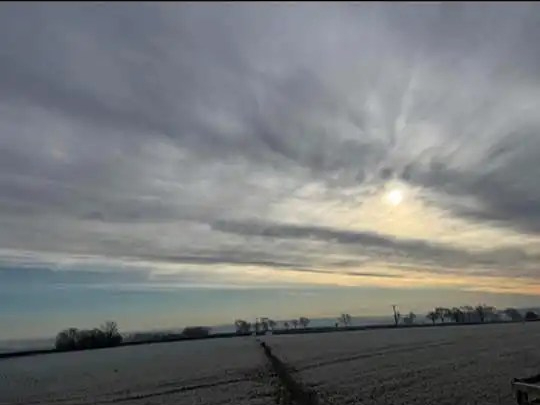
Clouds over the fields, photograph, Paul Lucas
Paul Lucas

The season of Lent is the time of reflection, fasting and prayer that Christians follow in the run-up to Easter, the most important part of the Christian faith. Christmas celebrates Jesus’s birth, but Easter celebrates his resurrection and promise of new life to everyone.

The Lent season lasts six weeks and reflects the 40 days that Jesus spent in the desert. Jesus spent this time alone there fasting, praying, thinking about his life ahead and his ministry to come. So, Lent begins with two contrasting days – Shrove Tuesday and Ash Wednesday.

Shrove Tuesday

Also known by many different names around the world – In the UK, we call it ‘Pancake Day’, France and French speaking countries, ‘Mardi Gras’ (Fat Tuesday), Spanish, Portuguese and Italian it is called, ‘Carnival’ – Germany ‘Fastnachtsdienstag’.

Whatever the origin of the name, the celebrations include food treats to use up all the eggs, fat and flour in the house before the time of fasting. Famous Mardi Gras festivals take place in New Orleans in the USA and in Venice, Italy, the remarkable ‘Carnival’ is world famous. Although contrasting, masks and elaborate costumes are worn in both celebrations and music abounds from every door and alleyway.

Ash Wednesday

This is the first day of Lent and after everyone has sobered up from the day before, the seriousness of Lent begins. In the UK, palm crosses from the previous year are solemnly burnt before the Ash Wednesday service. The priest mixes the ashes with sacred oil and during the service, anoints each person with a cross on their forehead. This is a symbol of their faith and their journey ahead – during Lent and beyond.

Why do Easter and Lent change dates?

A question we often wonder! The date of Easter is determined by the ‘inconstant moon’, as Shakespeare’s Juliet called it – Easter falls on the first full moon after the Spring equinox (on 21st March) and Lent is the six weeks before that. However, the moon’s pattern varies, so therefore the date of Easter and Lent vary as well.

Why the Full Moon? The Full Moon is a time to celebrate – this tradition goes back to the Ancient World, when harvesting, planting, reaping and sowing of people’s precious food was governed by the passage of the moon. Many gardeners still work to this pattern today – often with great success.

This link to pre Christian traditions is an interesting one – many links to ancient traditions and habits of life underpin the new Christian ones. Indeed many Christian churches, including our own church of St Peter here in Church Langton were built on ground that held ancient spiritual significance.

What do we do in Lent?

The season of Lent traditionally is a time of restraint in eating, drinking alcohol, coupled with prayer, reading the Bible and perhaps following a Lent course with others. These days, in the UK, how a person follows Lent is almost determined by them – Fasting can be strict or cutting out something you really enjoy.

Lent has recently become the time for doing something different in your life – Trying something positive, like more exercise – It is a great time for boosting your personal health and well-being – Body, mind and spirit.

Sundays are always festival days during Lent, so a good meal can be taken before starting the restrictions again in the week ahead.

Mothering Sunday

Mothering Sunday is a festival in the UK Lent season. It comes halfway through the six week Lent period on the third Sunday. Families get together to celebrate, give thanks for their mothers or those who take that role for them. Primroses and violets are traditionally given on this day.

Holy Week

Holy Week is the last week of Lent and follows Jesus’s last week of life on earth – as we know it. The events of that momentous week begin with Palm Sunday, his meetings with his family, Martha and Mary and progresses to Maunday Thursday, the Last Supper, his arrest and torture overnight, to the sorrow and heartbreak of his death on Good Friday. The climax and the joy comes on Easter Sunday with Jesus’s resurrection and promise of new life.

St Peter’s Church, Reredos: Last Supper, J Reid, after Leonardo Da Vinci

Easter

Easter is the new season – New life, new energy, new hope – More of that to come!

For now, enjoy pancake day, join us for Ash Wednesday at Welham and maybe even the Lent course – We’d love to see you.

The Countdown to Easter

The Church of England has a really useful guide online called ‘The Countdown to Easter’ which you might enjoy reading

Main photo courtesy Paul Lucas

Earth Hour 2024

Saturday 23rd March 2024, 8:30 – 9:30pm

Join us tomorrow evening and turn off all the lights in your home and businesses as part of the Earth Hour project.

Show a symbolic support for the planet and raise awareness of environmental issues affecting us all.

Earth Hour is a global climate change initiative that creates awareness of how energy should be saved to protect our environment.

Iconic buildings like Sydney Harbour Bridge, the CN Tower in Toronto and the Golden Gate Bridge in San Fransisco and the Colosseum in Rome have all stood in darkness for Earth Hour. In that hour do something positive for the planet, sort recycling, walk outside, maybe just sit quietly and listen to the sounds of the night.

Earth Hour is a project that began 2007 and you can read more and offer support here: https://www.earthhour.org/