Two services at St Peter’s Church this Easter and a family service for children at Thorpe Langton on Sunday 12th April, as some of our families are away over the holidays. Everyone welcome.
Good Friday Reflection, 2pm – 3pm and
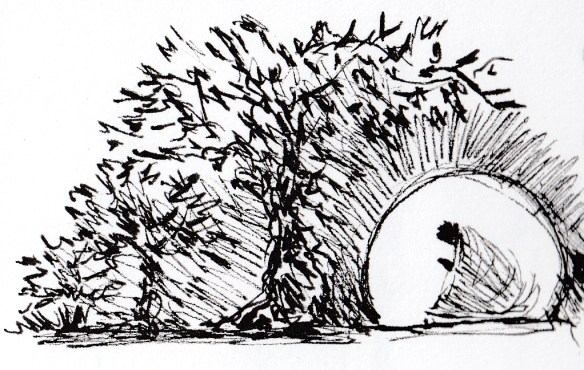
Easter Sunday 5th April 11.00am
Maundy Thursday
This day marks the events which lead up to Jesus’ death by crucifixion. We remember his last meal with his closest friends, his agony at prayer in the Garden of Gethsemane, preparing for the inevitable torture and death which was to come; his betrayal by Judas and the long hours overnight after his arrest and the denial of him by Peter as the cockerel crowed at dawn. It is a harrowing story, recounted in the four gospels and never easy to read.
What happens at services on Maundy Thursday?
The name, ‘Maundy’, comes from the Latin mandatum (commandment), recalling John 13:34, “Love one another as I have loved you”.
Typically, services are Holy Communion services, where we remember the Last Supper, where Jesus explained to his disciples what was going to happen. He told them that the bread and wine were his body and blood, shed for everyone.
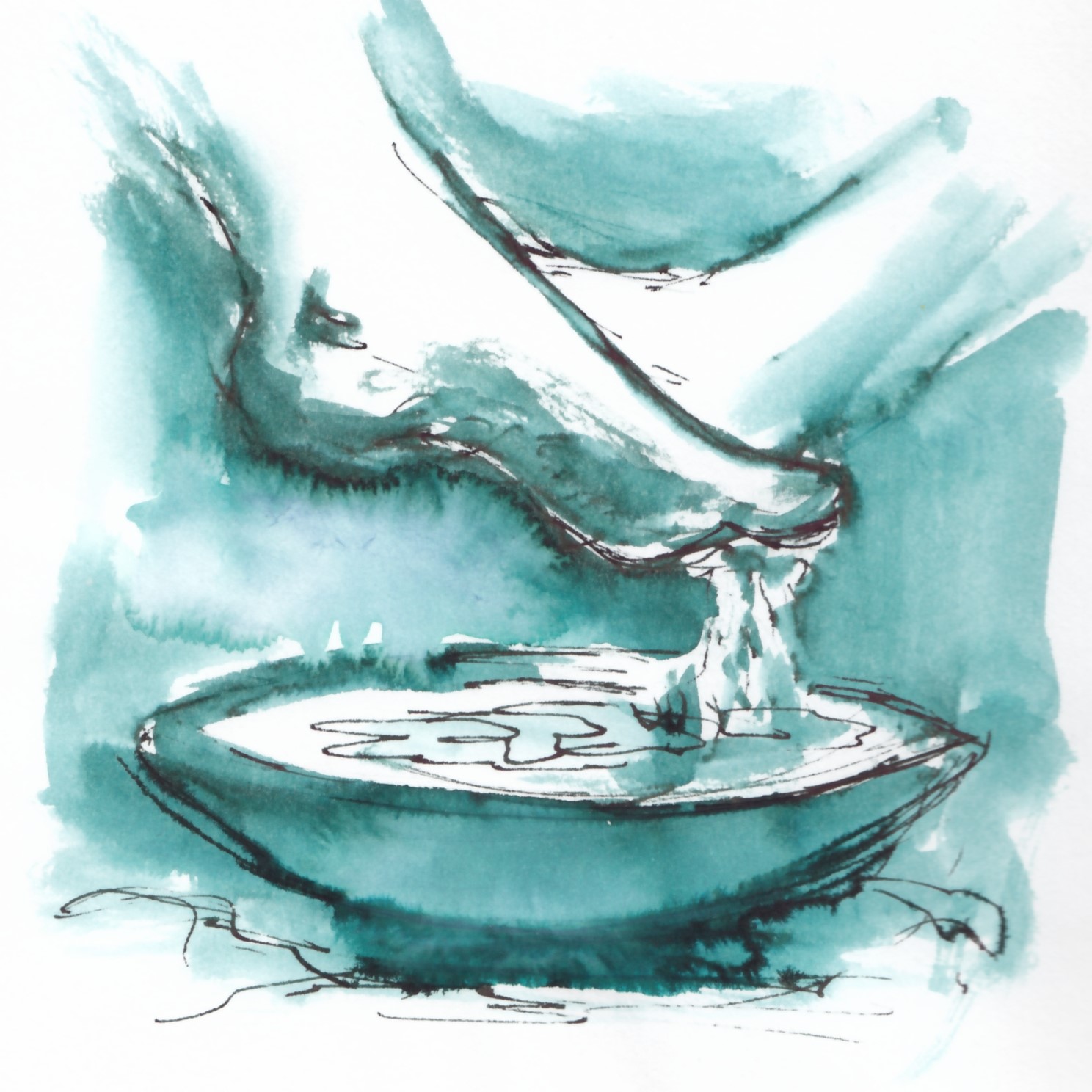
He told them how important it is to serve and care for each other and washed their feet. Many services continue this practice for penitents today.
Finally, services finish with a solemn task of stripping the altar, so the church is bare and stark to remember his death on the cross the next day
Maundy Thursday in the UK
Traditionally, in the UK, the reigning monarch distributes ‘Maundy Money’ as a gift of alms to the elderly. These little pouches of silver coins acknowledge service and dedication by the recipient. We were delighted when a resident of our village received this special gift from the late Queen Elizabeth II when she celebrated Maundy Thursday at Leicester Cathedral in 2017. The recipient’s name was put forward for her long service to St Peter’s and now in her 90s, still attends church regularly. A very much loved and well deserving recipient of the most special gift.
The Launde Deanery service will be at Hallaton church at 11am, Sunday 29th March 2026
EVERYONE WELCOME
Palm Sunday
The season of Lent is almost over, as this weekend we reflect upon and remember Jesus’s last week before his death upon the cross. This weekend, Christians celebrate Palm Sunday and remember Jesus’s arrival to Jerusalem on a donkey; his way strewn in palm branches by the people, singing ‘Hosanna’. Traditionally, in churches all over the world, crosses made from the fronds of palms are given to children and adults to carry with them. Next year, any left over are burnt and the ashes mixed with scented oil. This paste is used by priests to mark the heads of penitents at the start of Lent – and the cycle of Lent and Easter starts again.
More about Palm Sunday
The Church of England has a really useful guide online called Palm Sunday Fact File which you might enjoy reading
The season of Lent is upon us – in fact this year, it starts early, in February – This is an article with a little background and history to the season – and the Festivals that mark it.
What is Lent?
Paul Lucas
The season of Lent is the time of reflection, fasting and prayer that Christians follow in the run-up to Easter, the most important part of the Christian faith. Christmas celebrates Jesus’s birth, but Easter celebrates his resurrection and promise of new life to everyone.
The Lent season lasts six weeks and reflects the 40 days that Jesus spent in the desert. Jesus spent this time alone there fasting, praying, thinking about his life ahead and his ministry to come. So, Lent begins with two contrasting days – Shrove Tuesday and Ash Wednesday.
Shrove Tuesday
Also known by many different names around the world – In the UK, we call it ‘Pancake Day’, France and French speaking countries, ‘Mardi Gras’ (Fat Tuesday), Spanish, Portuguese and Italian it is called, ‘Carnival’ – Germany ‘Fastnachtsdienstag’.
Whatever the origin of the name, the celebrations include food treats to use up all the eggs, fat and flour in the house before the time of fasting. Famous Mardi Gras festivals take place in New Orleans in the USA and in Venice, Italy, the remarkable ‘Carnival’ is world famous. Although contrasting, masks and elaborate costumes are worn in both celebrations and music abounds from every door and alleyway.
Ash Wednesday
This is the first day of Lent and after everyone has sobered up from the day before, the seriousness of Lent begins. In the UK, palm crosses from the previous year are solemnly burnt before the Ash Wednesday service. The priest mixes the ashes with sacred oil and during the service, anoints each person with a cross on their forehead. This is a symbol of their faith and their journey ahead – during Lent and beyond.
Why do Easter and Lent change dates?
A question we often wonder! The date of Easter is determined by the ‘inconstant moon’, as Shakespeare’s Juliet called it – Easter falls on the first full moon after the Spring equinox (on 21st March) and Lent is the six weeks before that. However, the moon’s pattern varies, so therefore the date of Easter and Lent vary as well.
Why the Full Moon? The Full Moon is a time to celebrate – this tradition goes back to the Ancient World, when harvesting, planting, reaping and sowing of people’s precious food was governed by the passage of the moon. Many gardeners still work to this pattern today – often with great success.
This link to pre Christian traditions is an interesting one – many links to ancient traditions and habits of life underpin the new Christian ones. Indeed many Christian churches, including our own church of St Peter here in Church Langton were built on ground that held ancient spiritual significance.
What do we do in Lent?
The season of Lent traditionally is a time of restraint in eating, drinking alcohol, coupled with prayer, reading the Bible and perhaps following a Lent course with others. These days, in the UK, how a person follows Lent is almost determined by them – Fasting can be strict or cutting out something you really enjoy.
Lent has recently become the time for doing something different in your life – Trying something positive, like more exercise – It is a great time for boosting your personal health and well-being – Body, mind and spirit.
Sundays are always festival days during Lent, so a good meal can be taken before starting the restrictions again in the week ahead.
Mothering Sunday
Mothering Sunday is a festival in the UK Lent season. It comes halfway through the six week Lent period on the third Sunday. Families get together to celebrate, give thanks for their mothers or those who take that role for them. Primroses and violets are traditionally given on this day.
Holy Week
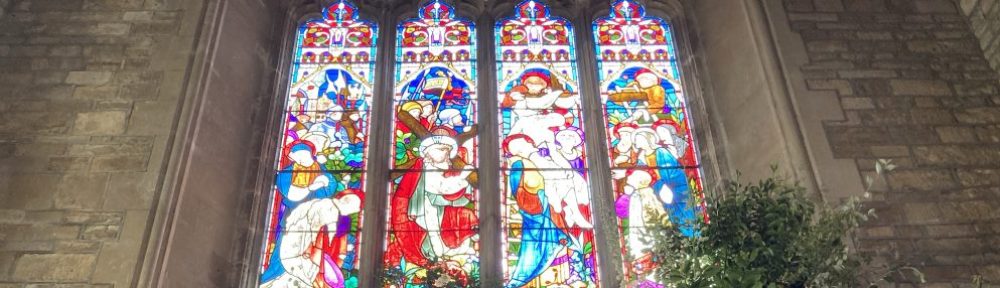
Holy Week is the last week of Lent and follows Jesus’s last week of life on earth – as we know it. The events of that momentous week begin with Palm Sunday, his meetings with his family, Martha and Mary and progresses to Maunday Thursday, the Last Supper, his arrest and torture overnight, to the sorrow and heartbreak of his death on Good Friday. The climax and the joy comes on Easter Sunday with Jesus’s resurrection and promise of new life.
St Peter’s Church, Reredos: Last Supper, J Reid, after Leonardo Da Vinci
Easter
Easter is the new season – New life, new energy, new hope – More of that to come!
For now, enjoy pancake day, join us for Ash Wednesday and maybe even the Lent course – We’d love to see you.
The Countdown to Easter
The Church of England has a really useful guide online called ‘The Countdown to Easter’ which you might enjoy reading



 St Peter's Church, Church Langton