About St Peter's Church, Church Langton, Leicestershire
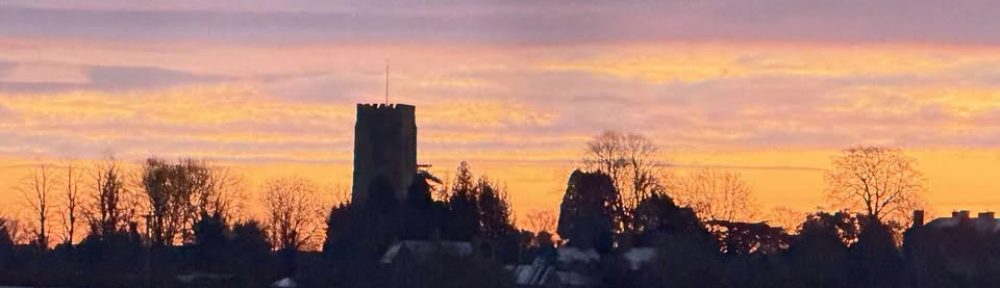
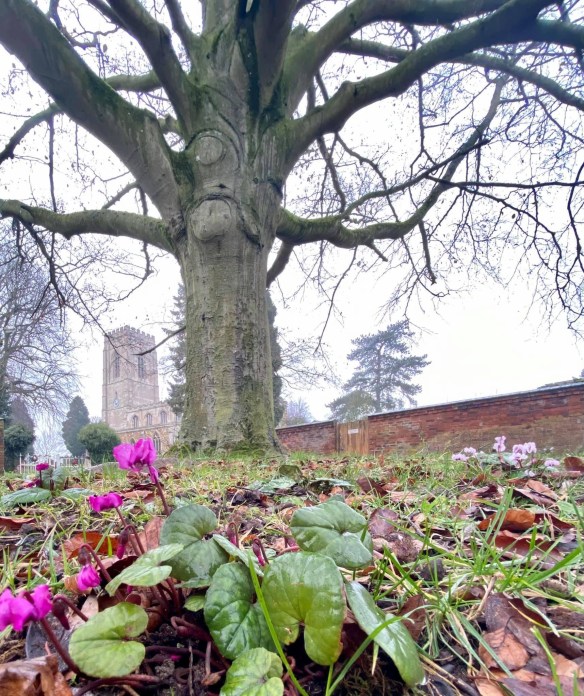
St Peter's church is set in the village of Church Langton, in south Leicestershire, near to the town of Market Harborough.
Worship is Church of England (Anglican). St Peter's is one of the churches forming the Benefice of the Langtons and Shangton in the Diocese of Leicester.
St Peter's serves three villages, Church Langton, West Langton and East Langton and has friends and visitors from all over.
We love to meet new people and visitors. Everyone is welcome! Contact us on info@churchlangton.org.uk and follow our story on www.churchlangton.org.uk
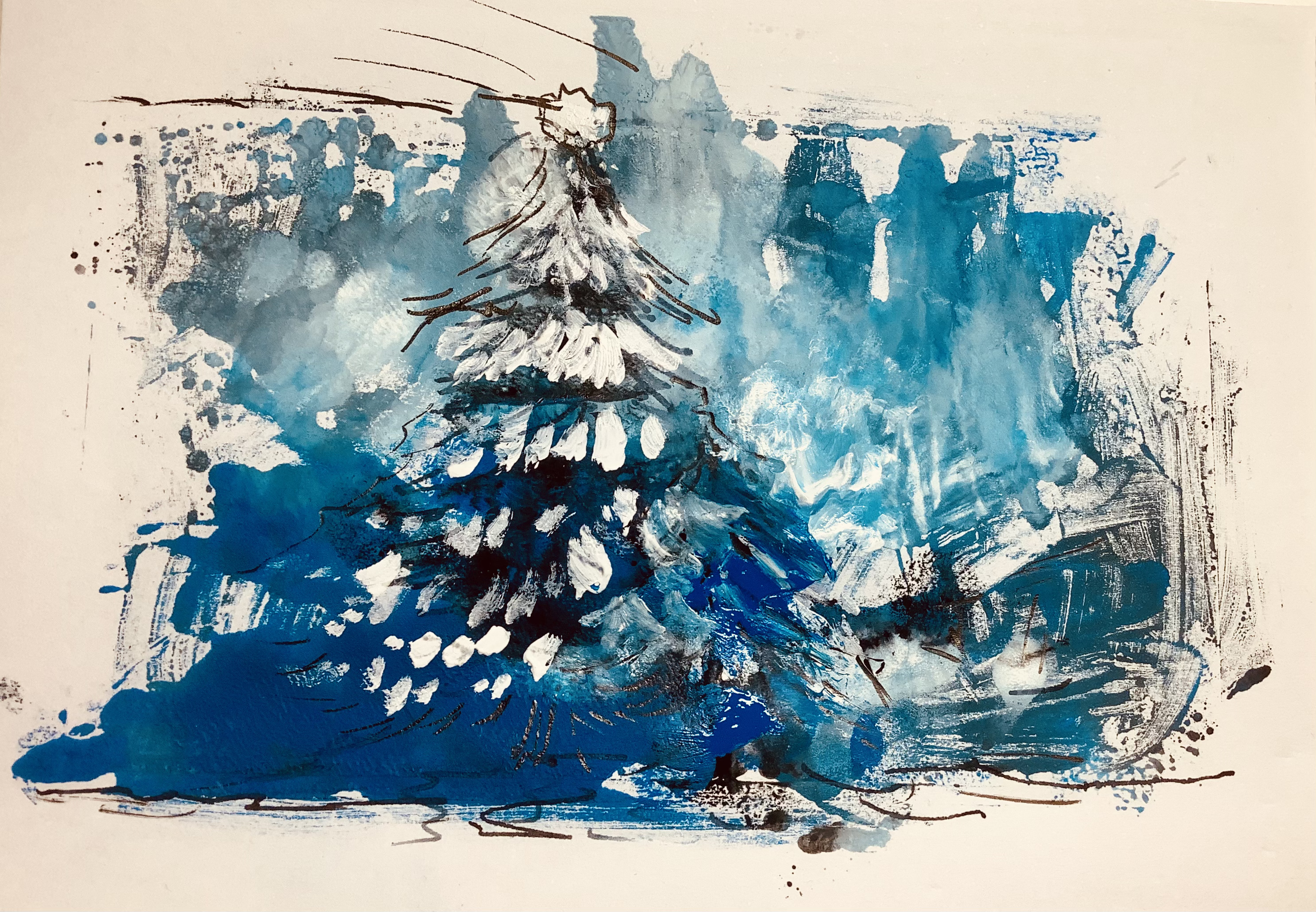
We are delighted to announce that our Christmas Card for 2020 is in production and should be delivered to our villagers in the coming days.
This year, we have decided to change the cover image from a photograph to a painting and our artist is long-time Church Langton resident Tony Spencer. We thought you might like to see a little more of Tony’s work and find out a bit more about him, in his own words…
Merry Christmas! Painting of St Peter’s Church by Tony Spencer
I’ve always loved drawing and painting ever since I was a kid and loved it even more at secondary school as you could use all the mediums; and my art teacher used to encourage you to try anything! My art teacher, bless her, wanted me to go to Art College, but in those days as the eldest son, you were expected to help put food on the table, so I missed out on that and started work age fourteen.
I suppose the two artists whose work I loved, were Turner and Constable. Turner with his majestic use of oils to paint ‘The Fighting Temeraire’ and Constable with his peaceul ‘Haywain’.
I love having a dabble with any medium but suppose I like pastels the best . As for my connection with Church Langton? Well I served twelve years in HM Forces and settled here in 1979 have been here since…
Tony Spencer
Four pictures by Tony Spencer – The cottage on the left corner is pencil and the lion, plums and owl all in his favourite medium, pastel
BLESSED Lord, who hast caused all Holy Scriptures to be written for our learning: Grant that we may in such wise hear them, read, mark, learn, and inwardly digest them, that by patience and comfort of thy Holy Word, we may embrace and ever hold fast the blessed hope of everlasting life, which thou hast given us in our Saviour Jesus Christ. Amen.
Excerpt from the sermon by Maxine Johnson, Lay Reader of the Langtons and Shangton, of the Memorial service held to honour Laurence Saunders on the 450th anniversary of his martyrdom. This was part of a period of pilgrimage by his family to remember the man and his life. A service of full choral Evensong led by Incumbent, Revd Barbara Knight, at St. Peter’s Church, Church Langton, 6th February 2005 attended by many of his descendants and parishioners.
According to the Vicar Board, Laurence Saunders became Rector in 1535. This is in fact an error, he was born in 1519, therefore, far too young to take up the post. In Foxe book of Martyrs, first published in 1563, Foxe had Laurence joining the Langton Churches of St. Peter, Church Langton, and chapelries, St Leonard, Thorpe Langton and St. Andrew, Tur Langton, after Edward VI came to the throne in 1547. It is recorded that Laurence took some parishioners to court in 1546 for felling trees on Church land, here in the Langtons. It is more likely that he became Rector around 1545 after completing his studies in Cambridge a year earlier. He was born at Welford, the fifth son of twelve children to Thomas Saunders and Margaret (nee Cave) of Stanford on Avon, the family later moved to Sibbertoft.
St Peter’s Church – Vicar Board – detail, showing Laurence Saunders dates of service
It would appear that Laurence was a wonderful Rector, both he and his wife, Joanna, were very happy here, ministering both to the temporal and spiritual needs of the parishioners in a manner that was little known in those days. Of his intellect, there can be no doubt, educated at Eton, and Kings College, Cambridge, gaining his B.A., and then returning three years later to complete his Masters in Latin, Hebrew and Greek. He was not your average Parish Priest, his devotion to prayer life, verged on that of one in monastic orders. Not only did he hold the living here in the Langtons, but also held Readerships at Fotheringhay College and Lichfield Cathedral. In March, 1553, Laurence was granted the living at All Hallows, in Bread Street; a prime London posting. A position which was previously offered to John Knox, the great Scottish reformer. He did however, keep on the Langtons, travelling regularly between the two.
It was in London that his troubles really started, the appointment could not have come at a more inappropriate time, with Edward dying four years later; Catholic Mary is placed on the throne. Laurence had been warned to stop his evangelical style of preaching and was reported to the authorities for not doing so. The Queen herself, had heard him preach in Northampton and was highly displeased! On Sunday 15th October 1554 whilst in church, teaching his parishioners in London, he was arrested and brought before the Bishop of London, who was determined to prove Laurence a heretic by questioning him on his views of Transubstantiation. The Roman Catholic church believed that bread and wine became the very body and blood of Christ. Laurence reply to the Bishop was recorded, “my Lord, you seek my blood and you shall have it, I pray God, that you may be so baptized in it that you may ever after loathe blood sucking and become a better man”. It didn’t do him any favours. Worse still, Laurence declared Mary to be a bastard child of Henry; a fact that was actually made in Henry’s will! With that, the Bishop cried, “carry away this frenzied fool to prison” and there he stayed. He received further examinations by the Queen’s council, he refused to recant any of his beliefs and was treated to much verbal abuse. He was excommunicated and delivered over to secular authorities. During his time in prison, he wrote to many fellow believers imprisoned for their Protestant faith, giving them great encouragement, including Archbishop Thomas Cranmer, Bishop Hugh Latimer and Bishop Nicholas Ridley, the three great reformers of English Protestantism.
What sealed Laurence’ fate for martyrdom at the stake was his refusal to acknowledge Transubstantiation – this was a burning offence as laid down by Henry in 1539 in the six articles of faith. The other five would have seen him dead by hanging! And so, to Coventry. Why Coventry? The authorities wanted to make an example of these heretics to deter others so the burnings were taken place in various parts of the country at this time. Also, Laurence had Midland connections and had in the past, preached at Coventry and had received a pretty rough ride by a mob not too keen on his style of preaching.
The fateful day was the 8th February 1555. Before he mounted the stake, he was offered a final pardon, but he refused, he was taunted a heretic by the Sheriff for which Laurence replied, “I do hold no heresies but the doctrine of God, the blessed Gospel of Christ that I hold and believe and have taught, I will never revoke”. When he was chained to the stake, he kissed it, saying, “Welcome the cross of Christ, welcome everlasting life”. For Laurence, it was not a quick death, the faggots used were green and did not burn well. Unlike Cramer, Latimer and Ridley, he did not receive gunpowder to hasten his end. It was a long painful death and Laurence suffered it with great patience. The year Laurence died, seventy-five other priests, laymen and women were martyred.
During the five short years of Mary’s reign, a total of three hundred were martyred.
With kind permission National Portrait Gallery, Laurence Saunders by Unknown engraver woodcut, 1555 or after 5 1/4 in. x 7 in. (132 mm x 178 mm) paper size Purchased with help from the Friends of the National Libraries and the Pilgrim Trust, 1966 Reference Collection National Portrait Gallery, London, Ref NPG D16803